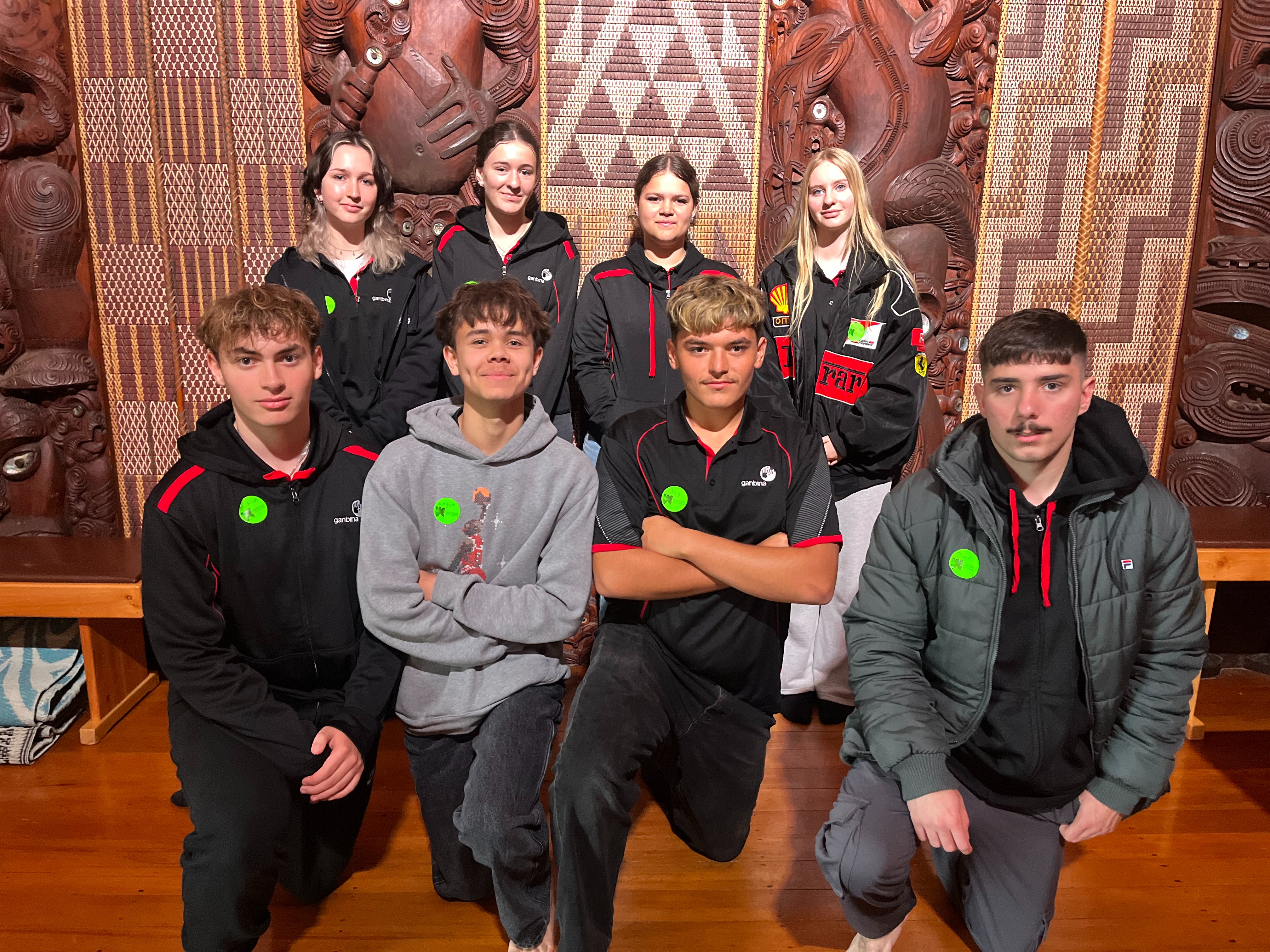
In Victoria's Goulburn Valley, about two hours north of Melbourne, Ganbina has spent nearly three decades rewriting the story of what is possible for young Aboriginal and Torres Strait Islander people.
Through its flagship Jobs4U2 program, nearly 2000 young people have completed their education and transitioned into work or further study in a region where the odds have long been stacked against them.
Founded in 1997, Ganbina supports Aboriginal and Torres Strait Islander youth aged five to 25 through programs in education, employment, training, life skills, scholarships, and cultural development. Ganbina's vision is to see, within two generations, Aboriginal and Torres Strait Islander peoples have cultural, economic and social equality in line with other Australians.
The Jobs4U2 program is a commitment to systemic change by 2047.
The evidence suggests it is working in the Goulburn Valley. While the national Year 12 completion rate for Indigenous students sits at around 66 percent (compared to 88.5 percent for non-Indigenous students) Ganbina participants complete Year 12 at a rate of 88.7 percent.
CEO Anthony Cavanagh has led the organisation since 2013. He describes it as having a 'hand up' rather than a 'hand out' philosophy.
Having navigated homelessness and disadvantage as a child and teenager, Anthony changed his own path through education, with the support of family friends. His own daughters graduated year 12 and are now employed working with a community NFP organisation.
“I knew what Ganbina was doing worked,” he says. “I knew it was possible, so my passion didn’t develop when I joined here — it already existed.”
Ganbina has a unique funding model, 100% by philanthropic trusts, foundations, and individual donors.
“With philanthropy there’s less change,” Anthony explains. “With governments there are three and four-year election cycles, and ministers and staffers change responsibilities. Philanthropy, by contrast, offers something rarer and more valuable: continuity of relationship.”
Ganbina’s partnership with The Ross Trust has spanned more than two decades and nearly $2 million in grants, despite leadership changes in both organisations. The relationship began in 2001 with a $40,000 contribution toward the Ladders of Success initiative.
“The Ross Trust has been a constant,” Anthony says. “You can have a relationship in philanthropy with the same person — or at least the same family — for generations. And literally, this is one of those.”
The Ross Trust is now providing an untied, trust-based $300,000 grant to support Ganbina’s national expansion.
The funding will enable Ganbina to extend the Jobs4U2 program beyond Shepparton. Communities across regional Victoria, including Echuca, Warragul and Broadford are interested in adopting the model, while programs are already operating in Benalla, Victoria, and in Queensland.
In each location, Ganbina co-designs with communities, transfers its framework and intellectual property, and after five years, steps back, leaving the community to own and run the program.
“We want to support tens of thousands more children and youth,” Anthony says. “That means we need more funding to help achieve our strategic goal of rolling out the program nationally.”
The Ross Trust Executive Officer Meghan Weekes says Jobs4U2 is clearly working.
“In less than a decade, there has been a cultural shift for young people involved in the program,” she says. “We are pleased to support Ganbina with the next phase through the untied grant, which upholds the principle of self-determination and acknowledges that communities are best placed to decide how resources can most effectively meet local needs.
“Flexible funding will mean Ganbina can adapt as priorities evolve, rather than being constrained by project parameters. It also strengthens long-term organisational capability, supports stable governance and workforce development.”